Getting more jobs
Appointment reminder text templates for your shop
What a reminder text is actually for
Most shops think of the reminder as a courtesy. It is not. It has two jobs, and only one of them is about being polite.
The first is obvious: keep the customer from forgetting. The second one is the valuable one and almost nobody writes for it - a good reminder gets the reschedule out of somebody's head and onto your phone while the slot is still fillable. A customer who tells you on Tuesday that Thursday no longer works has not cost you anything. A customer who realizes it Thursday morning, or just is not home when you pull up, has cost you the whole visit and the drive.
So write the reminder to make replying easy, including the reply you do not want to hear. Getting a bad answer early beats getting no answer at all.
The five things every reminder needs
Everything below fits in about three lines on a phone. If yours is longer than that, something in this list is doing the work and the rest is padding.
- Who it is from: Your shop name in the first few words. A reminder from an unrecognized number reads like spam and gets swiped away.
- The date and an arrival window: A window you can actually hit, not a precise time you cannot. 'Between 8 and 10' keeps you honest; '8:00 sharp' turns a twenty-minute delay into a complaint.
- Where you are coming: Repeat the address back. It is the cheapest way to catch the wrong-address bookings before you have driven across town.
- What they need to do first: Gate code, dog put up, cars out of the bay, a path cleared to the unit, somebody over eighteen home. This is the line that saves the trip.
- A one-word way to reply: Tell them exactly how to answer - confirm or reschedule. If replying takes one letter, you will hear back. If it takes a phone call, you will not.
Templates you can copy
Swap in your details. These are written to be sent from your shop's number, so the customer sees a name they recognize.
- The day-before reminder (your workhorse): "Hi [first name] - [your shop] here. We have you down for tomorrow, [day], between [window] at [address]. Reply C to confirm or R if you need a different time."
- The morning-of, on-the-way text: "[First name], [tech name] with [your shop] is headed your way, should be there in about [X] minutes. Anything I should know before I pull up?"
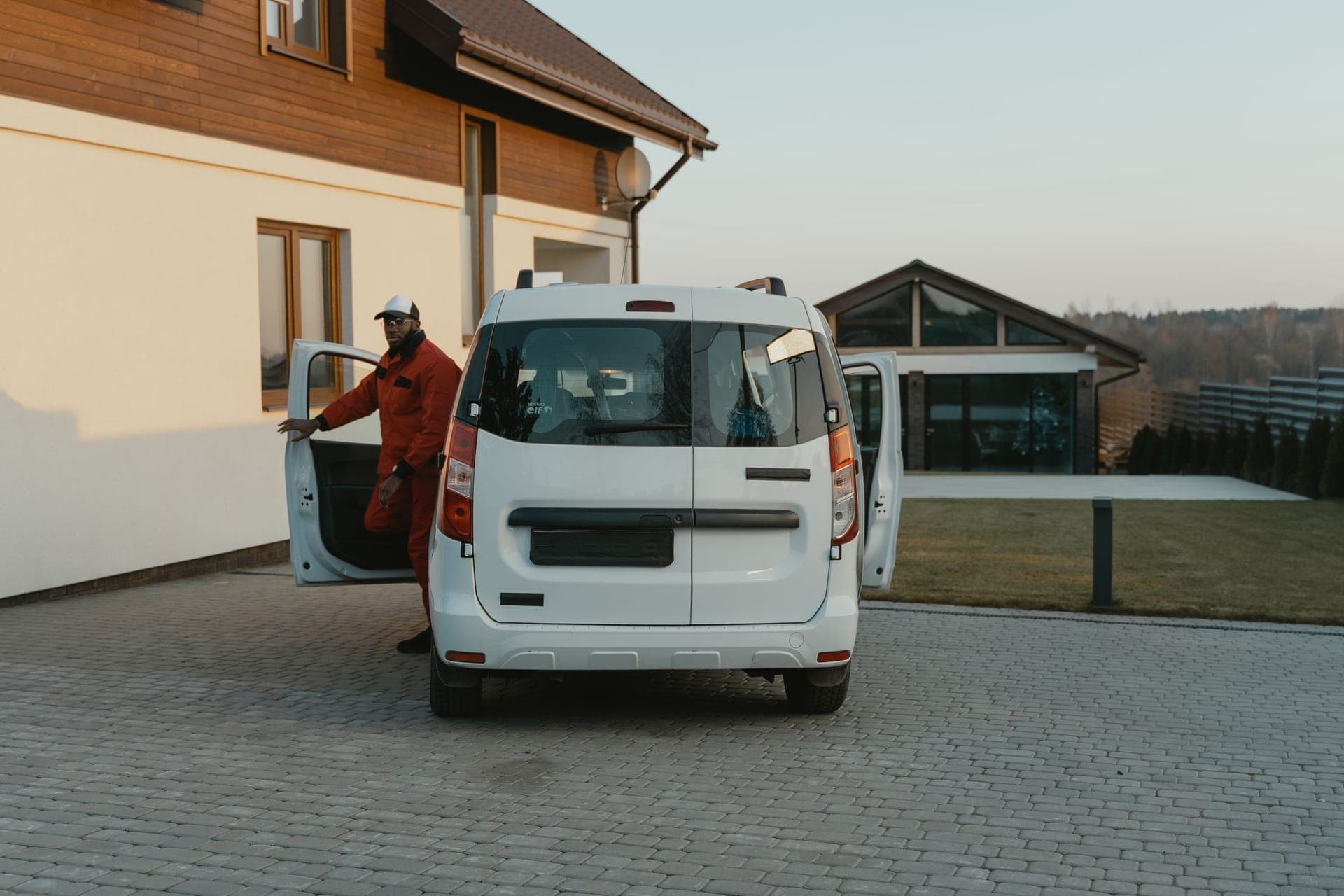
- A first-time customer: "Hi [first name], this is [your name] at [your shop] - looking forward to getting that [job] handled tomorrow between [window]. We will be in a [color] van, and it helps if [prep, e.g. the dogs are put up and there is a path to the unit]. Reply C to confirm or R to move it."
- A big job or a deposit job: "Hi [first name] - confirming [your shop] for [day] at [address], starting around [window]. Plan on about [duration]. [Prep instruction.] If anything has changed, tell me today and I will move it - reply R."
When to send them
This is my recommendation, not a law of nature - what matters most is that you pick a rhythm and hold to it, because customers who learn to expect the text start watching for it.
One reminder the day before does most of the work. It is far enough out that a canceled slot is still fillable, and close enough that the appointment is real to them. Add a short on-the-way text the morning of, which costs you nothing and heads off the you-never-showed argument entirely.
Two is usually plenty. A reminder three days out gets forgotten again by the time it matters, and a shop that texts four times about one appointment gets muted. If you only ever send one, send the day-before.
What gets a reminder ignored
The reminders that fail usually fail for one of these reasons, and the first two are the common ones.
- No shop name: "Reminder: your appointment is tomorrow at 9." From whom? Nobody chases down an unsigned text.
- Do not reply to this message: This is the worst line you can put in a reminder. You have just closed the only channel the customer would have used to tell you they need to move it.
- A precise time you cannot hit: Promising 8:00 and arriving at 8:25 turns a normal service call into a bad review. Give the window.
- A wall of policy: Cancellation terms, trip charges, and payment policy do not belong in a reminder text. Put them where they were agreed to, at booking.
- Sending it and going quiet: If somebody replies R and hears nothing back for a day, you have taught them that texting you does not work.
The text that saves a no-show
When you are standing at the door and nobody is home, the money is not gone yet - but the next message decides it. Do not lead with frustration, even when it is earned. Assume something normal went wrong and put the next slot in front of them while you are still on their mind.
"Hi [first name], [your name] with [your shop] - I stopped by for the [job] at [time] and did not catch you. No problem at all. I have [day] at [window] open, want me to put you down?"
That one text is the whole difference between a wasted trip and a rescheduled job. It works because it does not ask for an explanation, it asks for a yes.
Keep it clean
Reminders are about a job the customer booked with you, which is a different thing from marketing. Keep it that way: name your shop, keep the message about their appointment, do not fold these numbers into promotional blasts they never asked for, and honor STOP the moment somebody sends it. That is the practical shape of it rather than legal advice - our SMS terms page shows how we spell out consent, frequency, and opt-out.
Doing it by hand, or having it run
The templates above work. The part that is hard is not the wording - it is doing it every single time on the day the schedule falls apart, which is exactly the day a no-show hurts most. Reminders are the easiest thing in a shop to skip and the easiest thing to automate.
That is one of the growth automations Handlebar runs alongside the front desk: a confirmation when the job is booked, a reminder before the appointment, and a nudge to rebook anyone who does not show. If you would rather keep sending them yourself, take these templates and go - they are yours either way. If you would rather it just happened, book a 30-minute call and I will show you how it would run on your calendar.
Common questions
What should an appointment reminder text say?
Five things, in about three lines: your shop name, the date and an arrival window you can actually hit, the address you are coming to, anything the customer needs to do first (gate code, dogs put up, a clear path), and a one-word way to reply. For example: "Hi [first name] - [your shop] here. We have you down for tomorrow, [day], between [window] at [address]. Reply C to confirm or R if you need a different time."
How far in advance should I send an appointment reminder?
One the day before does most of the work - far enough out that you can still fill a canceled slot, close enough that the appointment feels real. A short on-the-way text the morning of is a useful second one. Two is usually plenty; a reminder three days out gets forgotten again, and four texts about one appointment gets you muted.
Should I ask customers to confirm?
Yes, and make it as close to effortless as you can - one letter, not a phone call. The real value is not the confirmation, it is the customer who replies that the day no longer works. Hearing that while the slot is still fillable is a good outcome. Never write "do not reply to this message" on a reminder; that closes the only channel they would have used to tell you.
What do I text somebody who did not show up?
Something short that assumes the best and offers a specific next slot, sent while you are still on their mind: "Hi [first name], [your name] with [your shop] - I stopped by for the [job] at [time] and did not catch you. No problem at all. I have [day] at [window] open, want me to put you down?" Do not ask for an explanation, ask for a yes.
Stop losing jobs to missed calls
Book a 30-minute call and I'll show you how Handlebar would work for your shop.